

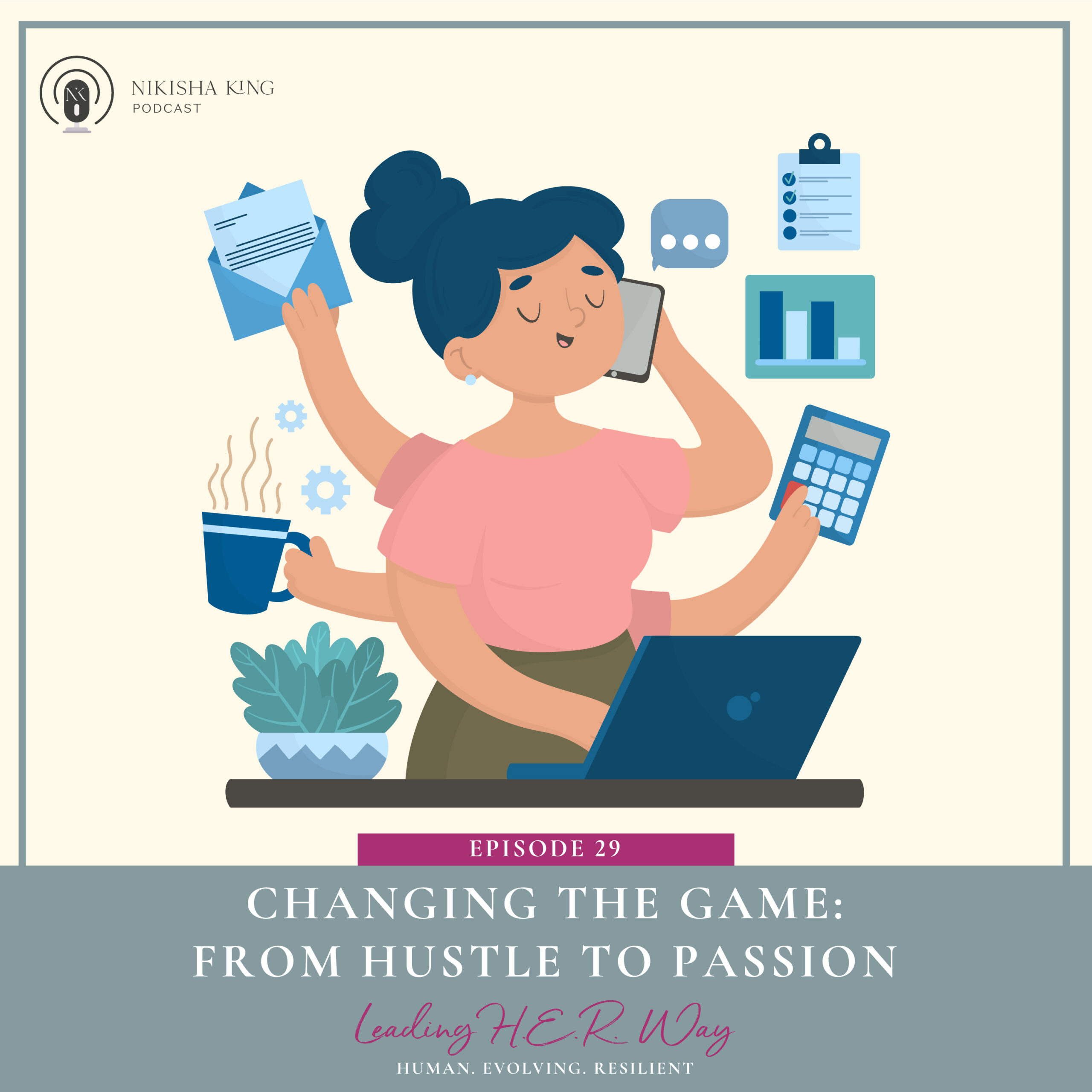
Most entrepreneurs start out wearing every hat. The visionary, the bookkeeper, the admin, the delivery person, and the one keeping everything moving smoothly, and for a while, that’s survival, not growth.
In this episode, Nikisha King talks with Sally Glick, a former CMO and partner at a New Jersey CPA firm, about the exact moment business owners realize running a business and building one that grows past them are two very different things.
Sally grew up inside her father’s accounting practice and spent 25 years building the brand, culture, and structure behind a firm that grew from 40 people to 100.
She and Nikisha get into why so many business owners avoid structure until something breaks, and why the best time to fix a problem is before the storm hits, not during it.
Sally’s own metaphor says it best: nobody wants to fix the roof on a sunny day, but waiting until it’s raining means you’re repairing the ceiling too.
The conversation goes deep into what actually blocks growth: holding onto every task yourself, needing to take individual credit instead of building a team, and mistaking “I built this” for “we built this.”
Connect with Sally Glick
- ROI-NJ (her writing, including the Wednesday’s Women column): roi-nj.com
Connect with Nikisha King
Want to keep building with me after this episode? Here’s where to find me and where to get into the room.
- Instagram: @nikisha.king
- Website: nikishaking.com
Taking Action:
Fully Booked Workshop. Tuesday, October 20th, in Berkeley Heights, New Jersey. We’re hosting a full workshop on a Strategic Networking Marketing Plan for startups who are struggling to get leads.
A full day working live on your strategic networking action plan, not a keynote and not a webinar. Space is limited to 12 women, with only 8 seats still open; registration is next Friday.
Grab your seat here: Next Level – Fully Booked Workshop
Transcript
Welcome with your host and business guru, Nakisha King.
This podcast is the ultimate destination for women creative entrepreneurs who want to break free from burnout.
If you are overwhelmed by client demands and feel like you're doing this all alone, you, my friend, are in the right place.
Now let's dive in for steps to take back your time and see simplify your workflow.
All right, Nikisha, take it away.
Welcome to Iconic CEO Podcast.
My name is Nikisha, and today we have a special guest, Sally Glick.
Sally is a former CMO and partner at New Jersey's so Company.
Now retired, she's a staff writer for ROI NJ and frequently speaks and facilitates panels for New Jersey nonprofits and middle market family businesses.
She sits on several boards and is known for her expertise in this sector, which is business growth.
And I'm so excited to have you here, Sally.
Today.
I spoke to you recently and we had such a great conversation and I want to learn more about you and I want our community to learn more about you.
So welcome.
Sally Glick:Thank you.
I'm not sure it's me that's more interesting, but I am delighted to be here and share some of the things that I have learned over the years.
So thank you for inviting me.
Nikisha King:Thank you.
Now you're retired, I want you to tell me a little bit your experience in this world as a cmo.
First and foremost, how did you get there?
Like, did you know in college you're going to be a cmo?
Did you start somewhere completely different?
Give us a little backstory about how amazing you are?
Sally Glick:So I am so amazing.
But let's not tell that to my kids who would disagree completely.
However, I have had an amazing start.
I did know I was going to be a cmo, and from the beginning, probably at the age of about five, my father was a sole practitioner accountant who at the time ran his business out of our home.
We had a finished basement and that was his office.
On Friday nights, it was party room, but during the week it was the office and when clients came over.
Although he spent much of his time visiting clients in their place of business, we were in our home.
But those who visited, my job was to open the door and greet them and he'd say, sally, someone's at the door.
And I presented the first face of our firm, and I think people absolutely love that.
As I grew through grammar school, my summer jobs and my after school jobs were running the Pitney Bowes machine, making photocopies with that filler that was so messy.
As technology changed and doing a variety of things in the office.
I grew up in that office.
And at one point I was at college and I was majoring in communications, and my dad said, I really need you.
I don't have enough clients, but I don't have the time to find more.
And so I came to his office.
This was long before accounting firm or professional services for marketing even existed or was even condoned.
So we didn't have a. I didn't have a title.
He just sort of said, get out there.
He didn't have time to join the new Chicago Chamber of Commerce or the Chicago Latin American Chamber of Commerce or the Downtown Business association, or make friends with the attorneys and the.
And the law firms with the law firms and the bankers who were in our community of about our size.
They just didn't have time.
In those days, we called it putting out fires.
Every time we got up, got to the office, there was another fire to put out.
And so practitioners do have to have that kind of focus.
They're the only ones there for the most part.
So I grew up in that.
And.
And as luck would have it, my mother had early onset Alzheimer's.
My father retired, more or less sold his practice to be able to take care of her.
And that left me without anything to do in an industry that didn't have marketing as one of its key pillars.
But I made my way.
And I found some organizations that did sell products, marketing products, advertising products to CPA firms.
And that was very useful because.
Because I've been on the inside as a purchaser.
Now I'm someone interacting as a supplier.
So they felt like I had an inside track to what is it that these accounting firms need to hear in order to value the stuff we're selling to them?
And I kind of grew up in that.
And I was working at an association of accounting firms that had national exposure.
They had about 30 or 40 firms.
The reason they had that network was they were not competing.
So if you were the California member, you couldn't be.
You weren't going to have.
You weren't going to meet anybody but the New York member.
You weren't going to find another firm just a few blocks away saying the exact same thing you were saying in your ad campaign.
And so as they maintained exclusivity, they were spread out.
And the firm that was in New Jersey called me and said, we love everything you're doing for the group.
We want you to move to New Jersey and do it just for us.
It was a big to do.
It was not that nobody expected anyone from the inside to be poached.
They did later create a bylaw that you couldn't take anyone from the staff and bring them to your own office.
But I was already gone and my youngest son had graduated from Cornell and he and his wife were living in the New Jersey area.
So it made it an easy transition for me.
And I ended up at Sobel Co. At some point and it was the most amazing opportunity I'd had since the day my father told me when I was six, go get the door.
And and actually that was sort of what Alan Sobel said.
He said, do your thing.
I've never worked for anyone except my dad who had that kind of trust and faith that I could do that.
We were about a 40 person firm when I retired and we were acquired.
We were 100 person firm.
I'm not taking credit for 60 people growth and the new clients, but I'm saying that building the brand and creating a different atmosphere contributed to who we were every day.
And it was an amazing opportunity.
Nikisha King:I love how, I don't know if it's a woman thing, I'm going to say that, but I love how we don't like taking credit.
I did it this morning too.
People were thanking me.
I'm on a leadership community and I'm like, it's not me.
Never take credit.
I don't know what that's.
We're humble, but we're so good at what we do.
Right?
Right.
Sally Glick:And I think that's part of what we're good at.
We're good at acknowledging our teams and that's why I think our teams and the cultures we create are powerful.
Because we're not saying it's all about me.
Look how great I am.
It is how grateful I am for this wonderful team.
So ye can we have both?
Nikisha King:Can we be grateful for what we created and invested in?
And we have a great team.
Right.
It doesn't have to be one or the other.
I think both are such a beautiful gift, you know.
Now let me ask you, in your 25 years in that CPA firm and doing what you're doing and became a leader, a partner in that journey, in building that brand, what did that seat teach you about the gap between running a business and.
And building one that grows past you?
Sally Glick:So I love those two words, running and building.
Running is different.
Right.
You're operating something, it's going as it always has and you're maintaining.
When you're building, you're creating, you're doing something different.
You're stepping outside of your comfort zone.
Perhaps you're making a mark you can build and then run.
I'm not saying they're mutually exclusive, but they're very different activities.
And it takes a different mindset.
When you're in a CPA firm, any professional services firm, it can be engineers, it can be attorneys.
The firm is there, but each person approaches that job in their own way.
If you're making products, you're a manufacturer.
Beauty of it is that it's consistent, right?
If I go to the store, if I go to an auto dealer and I'm buying Volvo, I'm buying safety, right?
I'm buying whatever their brand is about Volvo, different than Lexus or different than a Ferrari.
But I know what I'm getting, and I'm not asking who put it together, who was just running the business, or who even created that kind of a car.
But in a firm, each person approaches their clients, the firm's clients, with their own personality.
So perhaps Alan Sobel was very proactive with the clients he worked with and called them monthly to check in.
And how are they?
There are other partners who might say, they're fine.
I could talk to them when they get here during tax season.
Each person was different.
So the Sobel message as we were building our business had to be consistent.
People had to assume and acknowledge.
Not say assume, sorry, we know what assume says.
We had to acknowledge and anticipate what our message was and then consistently hold to it.
So you have to not break down, exactly, but be aware of the barriers of how each person approaches their work and their responsibilities and.
And then build a.
And then make sure that you've created a firm around them that enables them to do that and showcase and shine for the attributes they bring to the table.
I did have partners through the years that didn't return calls.
I had other partners who were preemptive and started the call.
Totally different attitudes completely with a different message.
Nikisha King:So wait a minute.
Based on what you're sharing and what that said, let me clarify, because I think I have a question and I want to get clarity on this.
What you're saying is that within the firm, everyone who works for that firm have a different way of doing something.
But did the firm want to create a brand that was consistent and we all should be doing the checking calls?
Or is it okay for me to do a checking call, but you not to do a check in call?
Like, tell me what?
Clarify that for me.
Which way?
Or both?
Or tell me a little bit more.
Sally Glick:So I'm going to answer In a way that everyone, you know, so uncomfortable.
And that's.
Yes, all of it.
Right.
So the firm itself has to have a reputation.
We were particularly well known in middle market family owned businesses.
There was the bulk of our client base and we also had about 20% of our clients were nonprofit.
So we had an image in the public that we maintained at our partner meetings.
We certainly set standards.
So you say we will return calls within a certain amount.
We will attend certain conferences where nonprofit organizations gather so that we can meet potential clients ourselves or meet referrers of clients.
But at the same time, people can also and do approach it in their own way, with their own level of expertise and their own commitment.
So you can set a stage and you can have a standard.
It's like watching two people in a play.
You might read the lines for Othello differently than I do, or I might interpret them differently.
We've got the same words and we're in the same play and we know how it ends.
But I might have a different approach to it than you do.
So it's very, it's not challenging.
But it's important that you have good partner meetings, honest discussion, and that when you choose your partners, when people come to your firm, someone comes out of school, they've graduated the degree in accounting, they're looking for their first job.
When you're interviewing them, you make some determinations about how well will they fit in.
I worked at a firm just prior to being at Sobelco and they were very institutional.
They were bigger and they conducted themselves in a more formal fashion.
I wasn't as comfortable there myself.
When I went to Sobel, it reflected more Alan, his father being the founder and Alan being the managing partner years later, his more informal style, his more collegial style, his more laid back and relaxed style.
So the firm had a brand of who we served and a recognition of what we did.
But each person within that does have by.
By the fact that they are the partners and they are the people interacting with the client.
You're going to have some different interactions.
You can't manage how everyone speaks to their client.
You can manage how often.
So you have some rules, some expectations, some standards.
Yes, but the actual standardization is harder.
Yes.
If I'm buying orange juice and I'm buying a certain brand, I know what it's going to taste like.
Others have too much pulp or they might be too acidic or whatever it might be, but I'm still going to orange juice.
You are going to get excellent accounting services, but you might Get a different approach from one partner to another.
Nikisha King:Do you feel like in your organization when you were in that stage of building?
We have different ways of doing something, but we have the standard.
Once a month you reach out, right?
If that's the standard, that's the standard.
You can reach out whenever you want to the beginning, the end, the middle.
But did you guys tell people why?
You know, like, sometimes I would say if you reach out in the beginning, there's an opportunity that this person might be working on something.
And last month they had a problem and you might catch them in that problem.
Like, did you educate to understand why the standard exists?
Because a lot of people in firms and companies have standards, but there's never a training that tells you why we have it.
It's just this is the rule, you follow it exactly.
And later on you might catch on.
Sally Glick:If you get lucky by your 10th year.
We Alan Sobel was very influenced by Simon Sinek and his why video I love.
And so at one point he had everyone watch the why video.
And at one of our partner meetings, in his very intentional way, he asked everyone in the room, why do you do what you do in preference?
As we were preparing to discuss why he expected us to be doing as the managing partner, what we were doing.
And it was very telling.
Almost everybody was on the same page.
We know why people are our business and whatever we need to do to bring that comfort level, to bring expertise, to bring them the services they've required to assist them in building their organizations and maintaining them profitably and successfully.
That was our why.
We did have one partner who did not last.
Who.
When we got to the why, instead of saying why it I'm rewarded by my clients good successes or whatever.
His why was, well, it's a law that you have a tax return done and the banks, when they lend you money, insist on an audit if the.
If the sum is sufficient enough.
So I do it because it's required.
Okay.
That person didn't last in the Sobel mentality because we weren't there because we were required.
We were there because we chose to serve our clients and help each client and be their best with our business and accounting advice.
So we did talk about why are we here and what does that mean?
And what does it feel like to sit on the other side of the table?
If I've called you with a question and it's taken you two days to return my call, what would that feel like if you were waiting two days for a call back from a doctor regarding your Test results.
So we talk frequently about our standards, what we thought differentiated ourselves from other firms who were more institutional or little colder in their approach or more formal in their attitudes.
And how did we behave.
Our clients were often, in so many instances, our friends.
They do develop a relationship with those clients.
It is about people always and forever.
Nikisha King:That's so good.
Now let me ask you, I don't know, I'm assuming with so Sobel, how you might have seen it transition.
But when you think about business owners, is there a shift that you see business owners start to act like an organization?
Because when I started, and like many other entrepreneurs, there is no organization.
There's nothing but chaos.
It's called survival.
Survival is I need to do everything to make money, to prove to everyone I can do this.
It's a proof system in the beginning, right?
I can do this.
I have to prove to myself I can do this, because I don't believe I can do this, because I never did this.
But before, I'm new to this.
But then a person who succeeds five years or more, there's a moment, something shifts and they start to organize.
One, define what organize means to you and define when you think people start to shift in this organization, what are they experiencing?
Because we all need to know, right?
Sally Glick:Well, entrepreneurs, either people that love being an entrepreneur and go from business to business.
I have a very dear friend who I know that's been in like five businesses, each one successfully and ultimately sold when the thrill of being the entrepreneur at the startup has, like, dissipated.
I think what the most important thing is when you wear start as an entrepreneur.
My father is a sole practitioner, actually was for his entire career an entrepreneur.
Right.
It never really built a business that sustained itself without him.
It wasn't.
It was just not that kind of a role.
His clients wanted him and him alone.
And when he wasn't there, that was the end of it.
Which is one of the challenges of being a sole practitioner or a.
In a professional services role.
But the most important thing is that you're wearing every hat.
So.
And even if you've opened a shoe repair store, you know, you're repairing the shoe, you're making sure people come in, you're cleaning the front of the store in the morning, you know, you're taking out the ad and the coupon magazine saying, come in.
If you need rehealing, whatever, you're doing it all.
When you realize that you no longer can do it all successfully and that you need help, then you determine, you know, how do I go about getting I'm no longer keeping me on books.
I'm not using QuickBooks to fit to pay my checks or I'm doing payroll with the system, whatever.
So I think system systemizing and creating those roles.
When I first came to Sobelco, I was not only their first marketing director and as a partner I became, I was their first woman partner, was also their first non CPA partner.
So I had a lot of things to do.
But what we didn't have were other people in other roles.
We didn't have an HR director.
We had it because you cannot live without it.
You have to have somebody to process those tax returns and your systems need to be top notch.
So we had it.
They added me and I was marketing and for a year or two I kind of juggled marketing and HR because there was like, oh, you know, that's people stuff, right?
So you do all that.
You have the holiday party and you can prepare the tax season lunches.
Because we made lunch on Saturdays kind of festive so that people wouldn't say, oh, it's Saturday and I have to work.
It was Saturday and you had to work.
Right.
You tried to make those into a little more fun neck and shoulder massages during tax season.
You know, the, the stuff that would have been HR and became HR were kind of seen as marketing.
It was internal marketing.
Nikisha King:Right.
Sally Glick:So external marketing, you're building your brand for the community internally.
You're creating a sense of who we are as an organization.
And as you start to create those jobs and pillars and fill them with professionals who do those jobs very well because they're trained and experienced, that's when you can really grow beyond yourself.
It's not, I can't wear another hat, I can't produce.
I have a friend who makes the most amazing hats for cancer victims.
And I was talking to her the other day and she was making like her 50th hat of the week or whatever.
And I said, gino, and recognizing that maybe you don't want to institutionalize this, if you had six people all making hats as well, you'd have six times as many hats.
She can only grow as much as the yarn.
She buys her own expense.
It's not a non profit.
So she's buying yarn at Michael's or wherever.
And then how many hats can she whip out in a day?
She's very limited.
And that's okay.
She's comfortable doing that.
And that's her only goal is however many I make is my goal for the day.
It's not, I'm trying to achieve anything greater or grander.
If she was.
If she said, wow, every person in the United States that is a cancer victim deserves to have this warm, cozy hat because you get cold, then she would have to have a different model.
She'd have to have people working for.
She'd have to have a system.
She'd have to have a way of distributing those to the right places.
Now she drives to the City of Hope and drops them off.
If you're distributing nationally, your trucks are driving and dropping them off.
So you have to acknowledge what are your own goals for your organization.
And if it is growth and to a different level, to take it there.
You need the people behind you who can make that happen, because nobody can run it all by themselves and get bigger.
If not getting bigger is okay with you, it's wonderful.
Wear every hat and have fun sweeping off the stoop in the morning and letting the delivery guy in at the back door at lunchtime.
But then know that that's the limit you've put on yourself.
Nikisha King:Yeah.
Here's the other part.
It's so interesting because I was on a call before we got on this, and I said, no one could build a business alone.
And the person asked me, what do you mean by that?
And I.
And then you just said it, right?
I want people to recognize something.
When you listen to this, you get to choose if you want to keep it small or big.
But if you look at reality, if you're really going to be honest, the reason you do what you do and when she makes hats for cancer survivors, it's because she is serving through her purpose, through her gift, her godly gift to help others.
Now, when I think about that, I think about my limitations.
Can only serve maybe 5 or 10amonth.
Only 5 or 10 are going to get that.
And if it's local, that's all the people.
But what happens to the other people around the world who wish they had that, like that, that product because they know it's freezing, they don't have here because of the chemo treatment.
And if I really want to serve, I don't know if I want to be scared of serving through the gift that I was given.
Yes, it's scary to build a business, but you don't have to do it alone because there are so many people who want to join you, but they don't know you exist because in your mind, you've created that smallness.
But sometimes it's weird because the thing we do and we keep small is because I just love Doing it.
I want to help, but we then limit the help.
And we don't realize this is such a gift and a blessing because guess what?
Nikisha doesn't know how to make this hat.
I am not the person who will be signing up, but if I can help you in other ways to get it out.
Sally is a cmo.
Sally can help start the branding, the culture and get people in.
And I understand the fear of what that is.
Don't get me wrong.
I hear you.
I understand the fear.
But what would it look like if you stop letting fear the false evidence of appearing real?
There is no such thing as fear.
The only fear you have is mostly if your life is at risk.
And being scared of growing a business is not your life at risk.
It's not at all you.
If you have value, trust me, you can go work for McDonald's, you can work anywhere and make it so.
I just want women out there who's listening to this podcast to understand when you are really good at what you do.
There is no such thing as keeping it small.
We're gonna fall in love with you.
We're gonna want to help you.
And other people who need you will need more of what you have.
And if you can be open to building that capacity to serve from a higher place than yourself, you will be changing lives.
And no, the world does not need to know you're changing lives.
You can do it on the personal side.
You can do it however you want.
We don't need you on social media screaming to the top of your lungs.
Sally Glick:Right?
Nikisha King:You can do it, but you never do it alone.
And I just want them to know that, because when you said that, I hear it all the time and I just think, how about you just let it go?
How about you don't even determine big or small?
How about we just get rid of that language?
How about we just go, I love making these hats.
And if I.
Sally Glick:How many can I make?
Nikisha King:Yes.
And how many people can I give it to that will appreciate that?
If I wanted to turn into a non profit, how many people will I tell?
Sally just told us on this platform about this hat.
Sally Glick:Right.
Nikisha King:That's all it is.
Right?
So I think the fear.
Sally Glick:I think the fear of losing control and part of it just because we're human is the pride we take in.
This is what I do.
This is what I did.
And I want you to have.
If it's a CPA firm and I have a certain service I offer, perhaps I'm very good with working with nonprofits and completing 990s and helping them get grants.
And I love working in that community.
I like the pride I take in doing that and I like the way I feel when I can say, this is what I've accomplished.
When I let go of it, I can accomplish so much more.
But it's not as direct.
It isn't saying, wow, you really did a great thing.
It is now.
We did a great thing.
You mentioned how women are better at recognizing teams and deferring the spotlight from themselves.
And this is a place where women absolutely can and should be doing that.
And they need to have the confidence that what they're building is so worthwhile that it can continue to grow well beyond them.
Even if they had the initial kernel of an idea, you have to let that go.
Nikisha King:Yes.
Sally Glick:If you can't own it, you'll kill it.
Nikisha King:That's it.
Sally Glick:The thing also, because what happens when you're done?
Nikisha King:Then it's done.
There's no more of it.
Sally Glick:Right.
Nikisha King:And the other part, what I love, if someone wants to just hit the rewind button when you said that, Sally, I, I and I, I want the control.
I want to say, I did it.
I is not service.
It's not.
But we is.
We include people and we share more with people.
This is what I truly believe entrepreneurship is.
And I think this is the reason a lot don't make it past the five year mark.
Because it's about, I, I want a business so I can use it for my retirement.
I want a business so I can get extra money, go travel.
If it's always about you, it won't grow because you're not nurturing it to nurture others.
And I find it so amazing because when I started, it sure wasn't about nobody else.
It was always about me.
It was about, I'm gonna be home, a stay at home mom, I'm gonna make it, I'm gonna get extra money, I'm gonna be able to do this.
None of that happened.
None of it.
No.
Sally Glick:I think the reason is when you start by saying, I'm just going to make extra money, put the word Justin, as well as if you've already, you know, defined the parameters that you're going to try for.
I think that when men start businesses, I could be wrong.
I'm not sure of this.
I think they have a bigger intent to begin with.
They do make women start as I'll just do some consulting or I.
And then it is built around you and your own capabilities and the limits you have as a human, human being.
But it is a second income often or even if it's a first income, you're doing well, you're achieving your goals.
You can go to the kids events, you can take vacations, you can enjoy your friends.
And so it serves a purpose.
I don't think there's a higher goal.
Whereas when whoever created, you know, David's cookies made a decision that it wasn't just going to be my mom makes great cookies.
There is a woman who has done an amazing thing, I have to say.
Diana Levy.
Her daughters have celiacs and they were having a hard time with.
Their friends are all having pizza and eating junk food.
And they couldn't.
And they were so aware of that.
And they.
She was in the food business anyway, but not in that food business.
Started making cookies with quinoa and other ingredients that had no gluten in them.
And they were so tasty and so delicious.
And the kids friends were eating them and other people were eating them.
And someone said, this is marketable.
When you get on United Airlines today and they give you those freebies, they have pretzels and they have other little things.
One of those little packets is an individual cookie, quinoa for an individual cookie.
Gluten free.
Made by Diana Levy called Undercover Snacks.
She went from her kitchen United Airlines international flights because she saw a need that was bigger than her, more than she could cook up on her stove for her girls.
So that does happen.
These amazing stories where, wait a minute, this is something and maybe everybody isn't onto something.
Maybe she was just a mom cooking really make baking really good cookies.
And her kids enjoyed them and were healthier as a result of them being gluten free.
And that was her goal.
But if at some point you're doing something that you really feel meets a different criteria, you do need to be brave enough to, to let.
To say, wait, she had to buy a kitchen.
She had.
She had to rent a space.
She had to go to a kitchen show and buy industrial commercial kitchen wear and find people to do that and then have people go to Trader Joe and other places.
Can we get on your shelf?
She had to have someone representing her.
And then she was on the shelf.
And then someone went to United Airlines and said, you need this cookie.
You don't have a gluten free option.
And they were like, okay, right.
She was right in Newark.
I mean, she was in New Jersey anyway.
And they were there.
And it worked out.
It could have easily been that they said, no thanks, we're not interested.
We're happy with Pretzels.
But that isn't what happened.
And if that had, she probably done something else instead and found a different avenue because she was made up her mind of what she was doing.
Nikisha King:And I love that story because the problem started with her children being left out and feeling left out from all the stuff.
Snacking.
We don't do it intentionally.
Women do it because they care about someone.
That's how we do it.
And I love that we do it from that place.
And when she did it, I don't think she said, I'm gonna go and I'm gonna be in United Airlines and I'm gonna do all this.
No.
Sally Glick:Exactly.
Nikisha King:That's the difference.
Sally Glick:I think she's as shocked as everybody else is, frankly.
Nikisha King:Yes.
Women, we do it because we care.
Men are world Dominators.
Not all, but some of them are like, I'm gonna dominate.
We got our Amazons, we got our Teslas.
You know what I mean?
Sally Glick:Right.
Nikisha King:But with Ms. Levy, when she was doing it, she's the only one who could speak on this, but I'm assuming she would do something, and then she would realize she needs more capacity and she would figure it out.
Sally Glick:Right.
Nikisha King:And she had people who might have been with her on the journey who figure it out with her.
She didn't do it alone.
Sally Glick:Right.
And she went to people who knew so that she did trust their judgment and knew they would guide her in a good way.
Nikisha King:Love that.
Now, when we speak about these stories, we know that a lot of business owners tend to avoid building structure because everything is fine, nothing is wrong.
All the systems, all the things I have, they all work.
But as I start adding, people.
Sally Glick:But they say, don't fix it if it ain't broken.
Is that philosophy right?
Nikisha King:I wonder if they can even see when it's broken.
That's the real question I have.
Sally Glick:Hence the problem.
It's broken, and you didn't even know it.
Nikisha King:Yes.
You call it fixing the roof on a sunny day.
That was one of your statements.
Now, why is that the best moment to build?
And how do you get someone to see it before the storm comes?
Sally Glick:So those are two different questions.
But we'll start with why is it a good time?
And the metaphor works because clearly, if you're standing on your roof in a rainstorm, you're rushed.
It's dangerous.
You might not have access to the right tools.
It's already dripping inside.
So you have.
Not only are you rushed and is it dangerous for you on the slippery roof, but you're doing exceptional damage because not Only is your roof need to be repaired, but now your ceiling may also be caving in as well.
So you only have more issues by not addressing small ones.
You let them get bigger and bigger and they do over and can potentially overtake you if you don't get them before that happens.
So why when it's sunny is because it's so much easier.
You have time to plan, you have time to budget, you have time to prevent other things from happening.
Being preemptive is smart in those circumstances.
Why don't people do that?
I think everybody, entrepreneurs, people of larger organizations.
And it's well intentioned.
It's not on purpose.
We're busy.
Technology has not made us less busy, it's made it more busy.
I never had to open 100 emails by 5:30 in the morning, but now I do, right?
So technology is great, you know, but it gives us greater challenges.
My father did tax returns by hand and they were four pages long.
Did you ever see I don't know what your tax return looks like, but the average one is like this big because it can be.
Because the technology enables us to produce different kinds of reporting and create different kinds of reports.
So the four page tax return is long gone, right?
Unless you've made no income and you're just filing a report with your Fein number.
So the fact that we are so busy, truly busy, that we don't have time to stop and think and so we all procrastinate a bit and put something off to the side that it either feels too time consuming, too expensive, maybe not essential at this minute.
You know, my sink is going slowly.
My sink is draining slowly.
I know that there's something caught in an air.
There must be.
It's draining slowly.
If I called someone to do to come in now when it's draining slowly, I might avoid significant Roto Rooter problems in the future.
But I also feel a little foolish.
It's just draining a little slowly.
Why bother now?
I'll wait until it's worse, which is such a silly thing to say.
I want it to get really bad before I can't use my kitchen sink at all.
And then, and only then will I call.
And the plumber's tied up for the next two weeks.
So now I can't even get at that plumber right?
So I need to do something else.
We are.
It comes with our nature to put off hard stuff.
Isn't there books, eat the frog first or something.
You just really don't want to tackle the stuff that's a bit scary.
Because it's a bit scary.
And if I just kind of push it off a little, I can do other things that aren't as scary and give me a better feeling of worth and value and accomplishment.
And so maybe I'm not going to fix the roof, you know, but maybe I'm just painting the ceiling.
And then I feel really okay.
I did that.
That's okay.
And it's not going to rain next week anyway.
We have a dry spell coming up, other than the nor' easter that was so unpredicted from El Nino.
So it's easy to put stuff off.
Much harder to face complicated, challenging issues, particularly if there's a price involved or time involved or an expertise you don't have that you have to hire someone to help you with.
And putting it off feels okay at the minute.
Once it hits, you want to kick yourself in the head, why didn't I do this sooner?
Why wasn't I more prepared?
Why didn't I have my.
Why didn't Dorothy jump in that hurricane shelter when she could have?
Right?
So it's just easier at the minute, and it's a relief.
It's like, I pushed those papers away.
I don't have to deal with that.
How many people do you know, speaking only in the tax accounting world that I was in, get their documents ready to visit with their tax accountant?
I can tell you how many people come in between April 10 and April 14.
And the answer is a lot.
Very, very articulate.
A lot.
Is all the.
Although I would say significant, I can say profound, but it's a lot.
And the accountants are even aware of that.
It's like, oh, I haven't heard from this one yet.
Oh, I haven't heard from.
That's okay.
They always put it off.
No one wants to gather their stuff together.
No one wants to think about the fact that they're paying taxes.
No one can remember where they put the canceled checks or where they have the insurance statement.
It's a pain.
And so.
And I shouldn't say no one, I should say most.
There are wonderful people.
s and whatever:And if they are company, then they hope that their CFO is doing that.
So they've absolved themselves by having the right people in place.
Now they do it.
The entrepreneur has no choice.
You are the cfo, and you are the Controller, and you are the bookkeeper.
So, unfortunately, it is going to be up to you.
If you can find someone else to do that for you, it's all the better.
But putting off is human nature.
The challenge is when you do so, you have to recognize that you will pay a price.
So if we could get our clients to stop and think strategically.
And by the way, and this is not diminishing of anybody, not everybody's a strategic thinker.
So we could have clients who really counted on us as their business partners, their accountant as their advisor.
Business and finance, which go together, of course.
What do I need to know?
What do I need to do?
They aren't thinking strategically.
They're great entrepreneurs who don't see paths.
I am making these wonderful little caps, and people with chemo will now be comforted.
And that's all I'm worried about.
I'm not strategically thinking about who else needs a cap like this?
Do they need scarves as well as caps?
Maybe your whole upper body is called a shawl might be good, right when you're sitting and doing your infusions.
So not everybody thinks growth, not everybody thinks strategy.
And it's harder to be doing the roof when the sun is shining, when you're not thinking strategically because you're not seeing past the sunshine.
And you know as well, sunshine doesn't last forever.
Even here in Los Angeles, in Marina del Rey, where almost every day is picture perfect, there are days that start a little cloudy.
Nikisha King:You are so right about that.
When you spoke about the attacks, you were speaking to the choir.
I was like, that's me.
I usually abdicate that to my husband.
I'm like, you take care of it.
I do other financing.
I don't want to touch it.
Usually I know where all the things are because I have all the logins to everything, right?
And I'm like, how can I be better?
Is there no one who built a system yet that pulls all my data in so I can be better at this?
But I love that you spoke about that, and I love the analogy.
Sunny days.
No one wants to fix the roof on a sunny day.
They're like, it's.
It's perfect.
Nothing's wrong.
But the storm.
I've experienced it myself.
The trickle and then the whole ceiling comes down, and you got to get all of it fixed.
And it was just because it was clock.
It was leave somewhere they shouldn't have been.
It was such a simple thing that created such a big job.
And I'm just like.
And as you're talking to me, Nikisha, I'm like, how can I work more in sunny days?
I gotta figure this out.
That's what my brain is saying.
Because I don't want to be in a storm.
I want when the storm comes, it feels good.
Because how can I create more good feelings even when there's bad moments, Right?
Sally Glick:Because you're ready.
I mean, when we hear I'm from New Jersey for 25 years, and when we would get a hint at a nore was coming, the first thing we did was run to shoprite and buy water, toilet paper.
Because it does feel good to be prepared.
You do know in the back of your head that at some point there will be stormy days.
Maybe not today and maybe not even tomorrow, but at some point there will be.
And even though a tendency to put off, those who do prepare feel better.
You know how you feel when you've left the store and you've looked down and you know if it's sunny right now.
But I know they did a weekend storm.
And I've got water and I've got food and I did this and I got some.
In the days when you say you got a movie, not when it was on streaming.
I got movies for the kids to watch or something for them to do, and you felt ready.
That's a rush in itself.
It feels good to be ready.
So you just have to focus on that message to get yourself to that point.
Nikisha King:I love that.
Now picture a woman who's two years in her business and she works really hard.
She's ready to grow past herself.
Can you please tell a Sally, where do you tell her to start to grow past herself after she calls you.
Sally Glick:Or before she calls you?
Nikisha King:I love that.
Before she calls me, because that might be one of it.
Sally Glick:So I would say you always surround yourself by smart people and based on your own goals and your own plans, whether that's your banker, your attorney, your accountant, your friends.
Maybe an advisory board.
Not everybody has to have a paid advisory board.
You can have people that meet quarterly and help you with, think things through and talk things out.
And so if you want to be bigger than that, you have to prepare and structure and organize and create consistency.
Know what your brand is, know who your audience is, know who influences that audience, and then look around and say, where do I need the most help and how can I start plugging the holes if you're unwilling to do that, if you don't have a plan, if you don't want to think about all the people who can help you and your Invisible team and your informal team and your real team of people who come in every morning, then you can't, you honestly can't grow.
As you've said.
You just.
It takes a village.
I think we have, we know someone wonderful who once said that in her campaign, it takes a village.
And she was right.
It does take a village.
And if you're going to do that and you prepare for it, you'll get there.
But if you aren't willing to plan and to divide the responsibilities and to have experts in the areas where you're not, you can't get bigger, but you can if you're willing to expand.
Nikisha King:I love that.
Thank you so much.
What I'm going to have you do is share a little bit more about what you've been up to.
How are you serving?
And at the end of that, tell us one of your favorite business books, because we all want to know.
Sally Glick:Okay, so business book, that wasn't fair.
I was thinking I could say a novel, but if I had to do business book, I would say Emotional Intelligence.
I'm starting there only because I'm going to forget what I would say.
So I'm going to that first.
I love the book Emotional Intelligence at Work.
And I love the thoughtful approach of being self aware because that is what holds us back, right?
If I know I'm not willing to share responsibility, if I know I don't trust other people to do it exactly as I do it, and maybe they don't need to do it exactly as I do it.
If I'm not aware that that's what I'm doing, I can't grow.
And I can't be a good leader without being a good coach, without being self aware of how important the people are around me are.
If I hold you in the dark so that I can always shine, I'm not going to be able to grow that business.
So self awareness and that book, Daniel Goleman is wonderful.
What am I doing?
So I'm retired, but I love to talk.
You never guess.
And I love to write.
And so my dear friends at ROI&J have been gracious enough to say after the years of our connected connectivity when I was the marketing director at Sobel, because you do love good positive press when you're building your brand and maintaining your presence in the community.
They said we'd love to focus more in our writings and our business news on women in business, women of inspiration who are doing, like Diana Levy, amazing things, as well as nonprofits that are addressing important issues, sometimes often quietly and purposefully, but not with a lot of fanfare.
Not everybody has the advantages of being the Salvation army or the Red Cross.
Right.
American Heart Association.
There's someone down the block that might just be feeding the neighborhood and that's pretty cool.
So they said we'd like to do a column of each.
So every Monday they have a column on focusing on a non profit.
That's inspiring.
And every Wednesday today, tada.
There's a column called Wednesday's Women, Women's Wednesday.
And there will be a profile of an amazing woman.
Certainly those women call me when they have story to tell.
So I need to know.
But that is what I get to do.
So I get to have that conversation, write up the story, they print it and we get some nice exposure for people who are doing inspirational things.
I get to do something where my brain is still working a bit and retired.
Not a golfer.
I'm not a tennis player.
I don't even play pickleball.
I'm so sorry.
I'm sure I'd fall down and break my ankle.
So I have to do something when I get up in the morning and writing is what I do.
So I have a really.
It's a very symbiotic relationship.
I think they think they're doing me a favor, but I know, I mean, they think I think I'm doing them a favor.
I'm doing the writing, but the reality is they're doing me the favor.
I love it.
So it's great to be able to tell those stories.
Nikisha King:And I just discovered that with Martha.
When I saw it, I was like, I didn't know Sally.
I don't know if we had that.
I know you mentioned the ROI and Jay, but when I saw it, I was like.
And then I saw your name on it and I was like, we have someone in common, which I love.
The world is small.
Sally Glick:I love networking and I love relationships and I love that we're all helping each other.
Yes.
Nikisha King:Yes.
I'm so happy.
We will be definitely sharing that in the show notes.
I want to.
I want to get that to share.
Sally, thank you for your time today.
Thank you.
Sally Glick:Thank you.
Nikisha King:Such a wise woman who was with us and sharing your knowledge because a lot of us are growing in our journey.
And when you're starting out, promise you, when I started out, there was no Sally in my life.
There was no.
Sally Glick:I'm glad I'm here now.
Nikisha King:Yeah.
Sally Glick:And I will say not, not to override you because that's not my job.
But I do want to use the word Mentor and I didn't at any point today.
And when you said you can't do it all alone.
One thing you absolutely need to have are good people around you whose judgment you trust.
They don't have to be in your industry.
They just have to have good common sense and be trustworthy in terms of they care about your success.
Those mentors will take you a long way.
Nikisha King:They care about your success.
Woo.
So many things you're mentioning.
I was speaking about before we.
Yeah, before 10am I'm talking a lot because I usually do BNI and we're meeting at 5 and like 6:30 in the morning.
Sally Glick:Yeah.
Nikisha King:So good.
Thank you so much.
Sally Glick:Thank you.
Nikisha King:All of your wisdom.
I appreciate you guys.
You're going to be able to learn more about Sally in our show notes.
Please follow her.
I'm going to put her website, social media ROI or roi.
Sally Glick:And by all means, ROI NJ has an amazing online newsletter twice a day, morning and afternoon and it is free.
Go to their site roi-nj.com just put in your email address and you'll start getting the business news that matters.
Say that.
Nikisha King:I love that.
Sally Glick:Thank you.
Nikisha King:Thank you guys.
Have a great week.
And for people out there who are listening today, I want to let you know that the month is October.
We're going to be releasing this and it depends.
One of the things I have going on is my iconic CEO accelerator.
We help all startups, women who are starting who are two who are five years.
You can also be a startup at 10 years because we use certain criteria for that.
If you're in a position where you need help.
We have the iconic CEO accelerator.
We're going to be sharing that information in our show notes as well.
We create a cohort of 12 women.
We do it virtually so women around the world have access to it where for 12 weeks we help you start shifting the way you think about growing your business.
It's the space that totally speaks to what we just spoke about and it's a space where you can feel seen, safe and have people around you who will mentor you through their experiences to see things differently.
I believe when we shift our perspective, we can shift our whole entire life.
And one perspective is free, it's available, it's there.
So I cannot wait to see you guys.
And thank you once again, Sally.
I will be speaking.
Sally Glick:Thank you.
Have a great day.
Nikisha King:Honey, before you go, I have one more thing for you.
If anything you've heard today sparks something in you, don't let that feeling sit.
That is a signal you are building something real.
You are creating impact and somewhere between the vision and the day to day, it can start feeling like you are doing it alone.
But you don't have to.
The iconic CEO communities where women entrepreneurs like you, who are serious about growth come together to build the structure, the systems and the team that their business actually needs.
We're talking about your first hire, your first real process, your first breath of okay, this is finally working.
If you're ready to stop guessing and start scaling, click the link in the show notes.
Let's have a conversation.
I want to hear about what you are building and show you exactly how we can take it further.
Thank you so much for tuning in to Iconic CEO Podcast today.
Please remember to share this episode with the woman in your world who needs to hear it.
And remember, leave a review and hit that follow button so we can get more of our messaging out.
And until next time, keep leading, keep building, and dare to become the iconic CEO you were always meant to be.



Comments +